
Concrete Demolition in Texas
Concrete removal and demolition services
Structural concrete demolition — foundations, tilt-wall panels, grade beams, concrete piers — requires a more methodical approach than standard slab breaking. Tilt-wall panels on industrial buildings are typically 6 to 8 inches thick, heavily reinforced, and connected to each other at pilasters and roof framing. Before any panel comes down, the building's structural system needs to be assessed: what's holding what, what sequence keeps the remaining structure stable as sections are removed, and where are the embed plates and ledger connections that need to be addressed before the crane picks a panel. We involve a structural engineer on selective tilt-wall demolition projects to confirm the sequencing plan before we make the first cut.
Post-tensioned concrete slabs are a special case found in many Texas commercial buildings and parking structures. PT slabs contain tensioned steel strands (typically 270 ksi low-relaxation strand) that are under significant tension — cutting one without a proper de-tensioning plan can result in explosive energy release and strand whipping that is a serious safety hazard. We identify PT slab conditions during the pre-demolition site assessment using ground-penetrating radar, review available structural drawings, and develop a specific de-tensioning and sequencing plan before slab cutting begins. Any contractor who doesn't treat PT slab demolition differently from regular slab removal is taking a safety shortcut that Texas OSHA standards do not permit.
Utility protection during concrete demolition is non-negotiable. In urban areas and on industrial sites with active process piping, the overhead and underground utility network is dense. Mechanical slab breaking, hydraulic hammers, and excavator-mounted breakers transmit significant vibration and impact energy through the ground — enough to crack adjacent utility lines, jostle loose couplings in older pipe systems, and damage conduit runs in pavement. We identify all utilities within the demolition influence zone using 811 locates supplemented by as-built drawings from the facility owner and GPR scanning, then install isolation and protective measures before mechanical demolition begins. For facilities with active overhead power lines, we establish a safety exclusion zone and coordinate with the utility to either dead the line or install protective barriers before any crane or high-reach equipment operates in the area.
Concrete debris disposal in Texas is straightforward — clean, unreinforced concrete is accepted at most construction debris landfills, and many concrete recyclers accept reinforced concrete for processing into recycled aggregate. Reinforced concrete with rebar must be hand-stripped or mechanically processed to separate the steel before the concrete is acceptable to recyclers. On larger projects, on-site crushing using a portable concrete crusher can reduce haul costs significantly by processing concrete into base material for the new construction phase. We assess on-site crushing feasibility based on project volume, site access, and the specification requirements for the new base material.
Dust and noise are public and regulatory concerns in Texas urban demolition projects. Many municipalities require a dust abatement plan for demolition projects near occupied buildings or public rights-of-way — water suppression is the standard approach, using water trucks or fixed spray bars on the demolition perimeter to knock down airborne particulate. Concrete saw cutting generates significant respirable silica dust (a OSHA 1926.1153 regulated substance) and requires wet cutting with a diamond blade or dry cutting with a HEPA vacuum-equipped saw. We don't use dry cutting without proper respiratory protection and vacuum capture — it's a regulatory requirement and a crew safety issue.
What's Included
- •Pre-demolition site assessment including GPR scan for PT strands and unmapped utilities
- •Structural sequencing plan for selective or full structural concrete demolition
- •Demolition permit coordination including asbestos survey coordination and TCEQ notification
- •811 utility locate and private GPR mapping of utility influence zone
- •Utility disconnect confirmation and protection measures before mechanical demolition
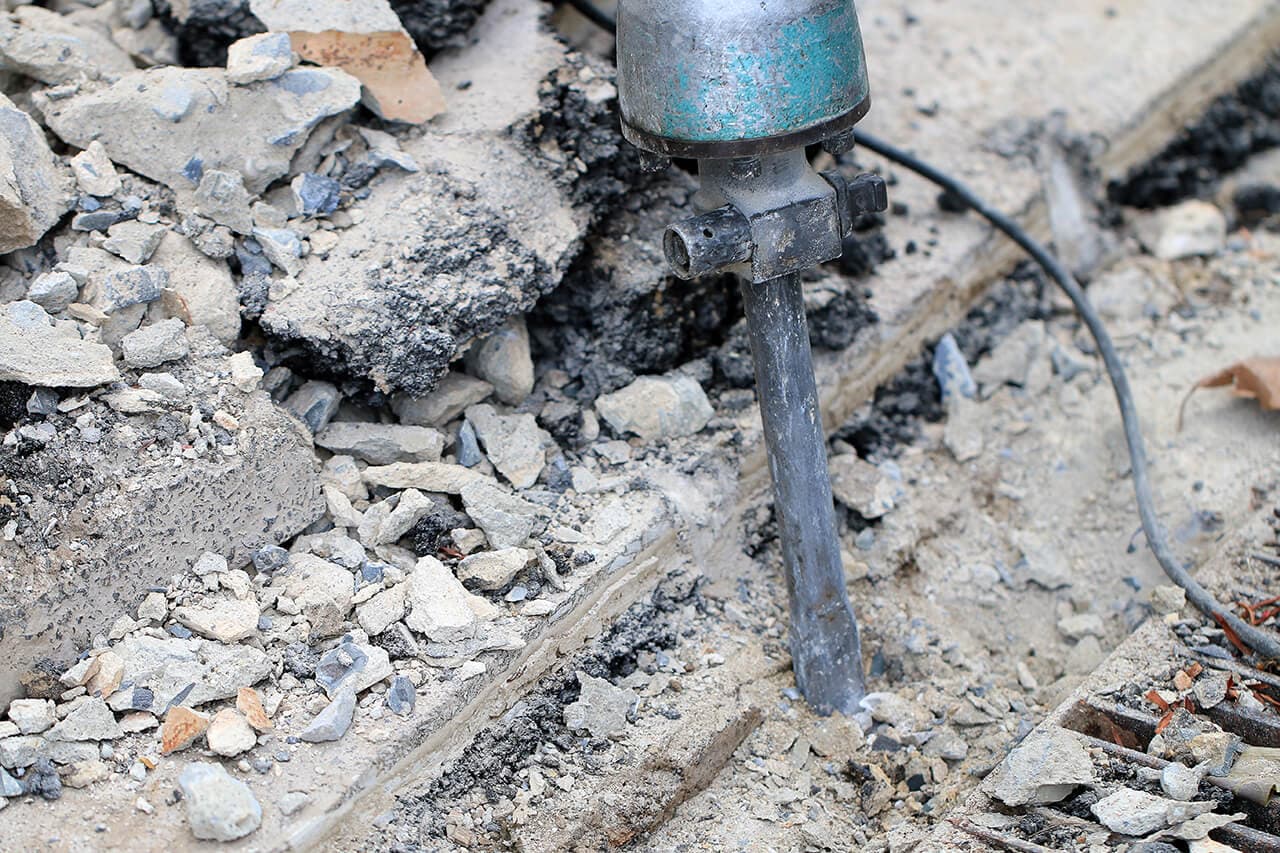
- •Hydraulic breaker, excavator, and diamond saw concrete demolition operations
- •Post-tensioned slab de-tensioning plan and controlled strand release
- •Dust suppression: water truck, wet saw operation, HEPA vacuum systems
- •Debris loading, haul, and disposal at licensed facilities with manifests
- •Concrete recycling assessment and on-site crushing feasibility review
- •Site cleanup and grading after demolition for new construction readiness
Frequently Asked Questions
What concrete demolition services do you provide on commercial and industrial sites in Texas?
We provide complete concrete demolition for commercial and industrial sites including tilt-wall panel removal, reinforced slab and grade beam demolition, foundation removal, parking structure demolition, concrete pavement removal, and selective saw-cutting and breaking for renovation projects. We self-perform demolition using excavator-mounted hydraulic breakers, diamond blade saws, and hand equipment, coordinating debris haul and disposal. We are the GC of record on most of our demolition projects, which means we own the sequencing, structural, and utility protection work.
How do you handle post-tensioned concrete slab demolition in Texas?
Post-tensioned slabs require positive identification before cutting — we use GPR scanning and available structural drawings to locate PT strand layout. We develop a de-tensioning plan reviewed by a structural engineer for any PT slab where cutting is required. PT strand must be cut in a controlled sequence with proper standoff distances maintained during strand release. We do not treat PT slab demolition as a routine slab break without prior PT identification. Texas OSHA construction standards apply to all demolition work on Texas commercial sites.
What permits are required for commercial construction demolition in Texas?
Most Texas municipalities require a demolition permit for removal of commercial structures. Houston, Dallas, San Antonio, and Austin all have demolition permit requirements with specific documentation including asbestos survey (required for pre-1980 structures), utility disconnect confirmation letters from all utility providers, and structural engineer sign-off for selective structural demolition in some jurisdictions. We handle permit coordination as part of our demolition scope. TCEQ notification is required for buildings containing regulated asbestos-containing material (RACM) before demolition begins.
How do you protect active utilities during concrete demolition near existing infrastructure?
Before any mechanical demolition begins, we map all utilities within the influence zone using 811 locates plus private GPR scanning for unmapped conduit and piping. We require potholing to confirm depth and location for utilities within 5 feet of demolition work. Mechanical breaker and excavator operations are subject to hand-excavation requirements within 24 inches of any confirmed utility. For active overhead power lines, we establish OSHA-required approach distance exclusions and coordinate with the utility provider for protection measures before crane or high-reach equipment operates in the area.
Can demolished concrete be recycled rather than landfilled in Texas?
Yes. Clean, reinforced concrete is accepted at concrete recycling facilities across Texas where it's processed into recycled aggregate base course and other products. The recycler typically requires steel reinforcement to be reasonably separated before acceptance — we use excavator magnets and hand sorting to strip rebar from broken concrete before loading. On larger projects we assess on-site crushing as an alternative: a portable crusher processes broken concrete into base material that can be used in the new construction, eliminating haul cost. We get a materials specification approval from the civil engineer before using recycled aggregate in new base course.
How do you manage dust during Texas commercial demolition projects?
Texas urban municipalities and OSHA silica standards (1926.1153) require dust control on demolition sites. We use water trucks for exterior wetting on open sites and HEPA vacuum-equipped wet saws for all concrete cutting operations. Respirable silica exposure from concrete demolition is a regulated health hazard — we do not use dry grinding or cutting without engineering controls and respiratory protection. On sites adjacent to occupied buildings, we coordinate dust suppression with the owner's schedule so water application doesn't conflict with occupied areas.
Common Situations
- •A Dallas logistics developer needs selective demolition of a 60,000 SF tilt-wall panel building where three panels must remain standing as a shared wall with an adjacent occupied facility, requiring a structural sequencing plan and temporary bracing before demolition
- •A Houston industrial site redevelopment requires demolition of a post-tensioned concrete equipment pad from a former manufacturing operation, with unknown PT strand layout requiring GPR scanning and structural engineer review before cutting
- •A San Antonio commercial renovation requires concrete saw cutting to create new dock door openings in an existing 8-inch reinforced tilt-wall distribution center without affecting the structural integrity of the panel
Example Engagement
Service Type
Commercial Construction Demolition
Scope
Selective demolition of 8 tilt-wall panels and associated grade beams from a 120,000 SF existing distribution center to allow for a new dock-door addition, with 3 panels remaining as a live shared wall with an adjacent occupied tenant space
Client Situation
A property owner needed to reconfigure a tenant's distribution facility to add 12 dock-high positions along a new south wall, requiring removal of existing tilt-wall panels and grade beams in a selective sequence that kept the adjacent tenant's space operational throughout demolition.
Our Approach
We engaged a structural engineer to develop a temporary bracing and sequencing plan for the panels to remain, confirmed utility locations in the demolition zone with GPR, installed temporary shoring before the first panel crane pick, and completed the demolition sequence over a holiday weekend to minimize operational disruption to the adjacent tenant.
Expected Outcome
Eight panels removed and grade beams cut and removed on schedule, with adjacent tenant undisrupted and all remaining structure stable and inspected by the engineer of record before new construction mobilized.
Why Choose Us
Free Estimates
Get a detailed project estimate tailored to your specific needs and site conditions.
Expert Consultation
Our experienced team provides guidance on project requirements, permits, and best practices.
Quality Assurance
We ensure all work meets or exceeds local building codes and industry standards.
Thickness Guide
Related Services
Commercial Asphalt Parking Lots
Commercial asphalt parking lot construction
Asphalt Repair and Resurfacing
Asphalt surface repair and resurfacing services
Asphalt Sealcoating
Asphalt sealcoating and protective coating services
Earthwork
Site preparation and earthwork services